How to Build a Content Strategy with No Marketing Background
If you've never taken a marketing class but still want a content strategy that works — this guide gives you the system.
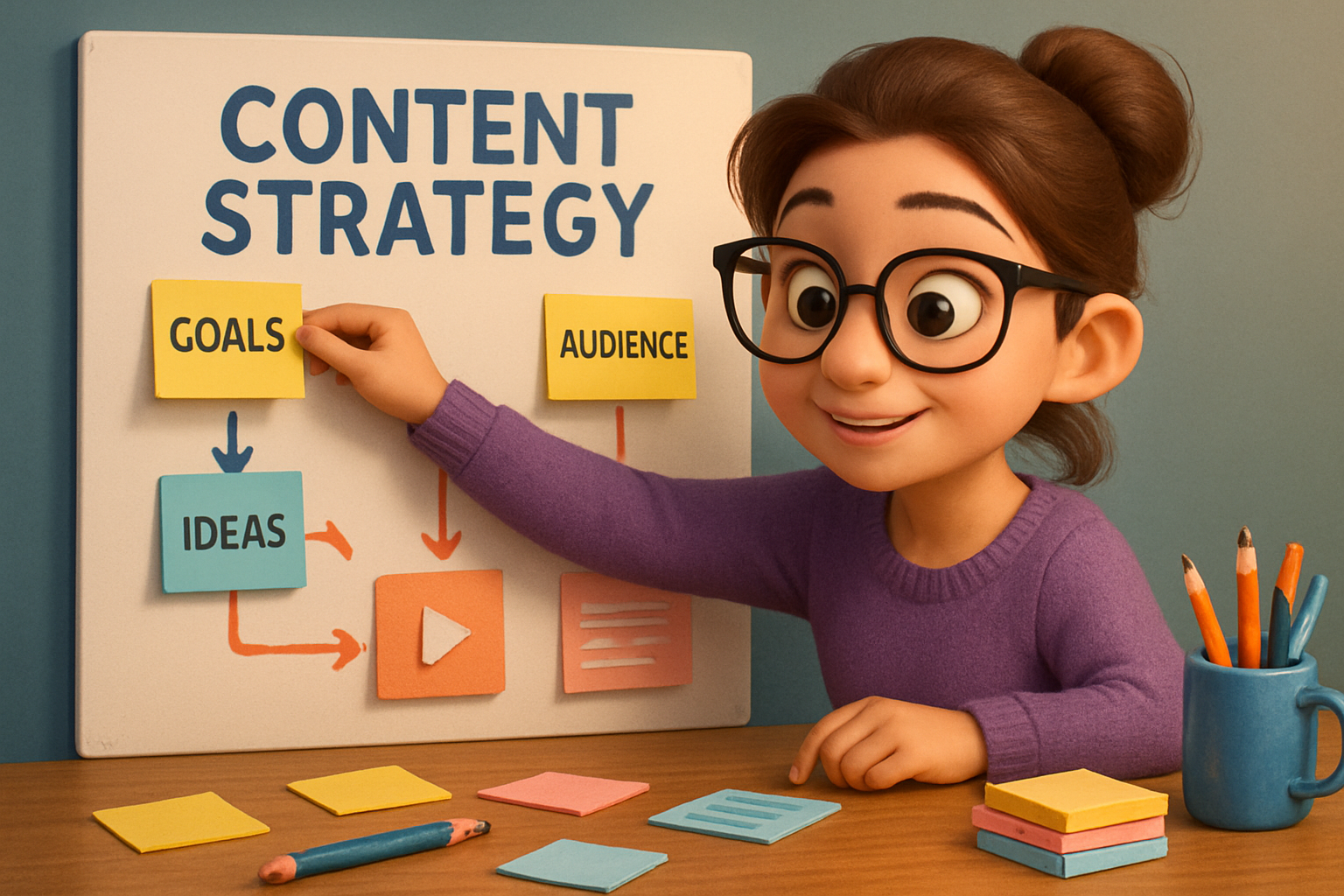
Most first-time content creators skip this and go straight to writing. Then they wonder why nothing converts. The truth is, content without a defined audience is just noise.
Start with one person. Not a demographic — a person. Think about the customer who got the most value from what you offer. What were they struggling with before they found you? What did they try first that didn't work? What made them finally say yes?
Write that down in plain language. You've just created the skeleton of a buyer persona.
From there, ask:
- What does this person search for when they have the problem I solve?
- Where do they spend time online — LinkedIn, Instagram, YouTube, Reddit?
- What would make them trust a brand they've never heard of?
You don't need expensive tools to start. A notes doc and honest thinking will get you further than a complicated spreadsheet you'll never update.
Step 2: Define What Your Brand Actually Stands For
Without a clear point of view, your content will feel generic — and generic content doesn't build trust or loyal customers. Your brand voice is what makes a stranger feel like they're reading something written specifically for them.
Answer these three questions in writing:
What do you believe that most people in your industry don't say out loud?
Who is your brand NOT for? (This is actually easier than defining who it IS for, and just as useful.)
If your brand were a person, how would they talk at a dinner party — formal or casual? Funny or serious? Blunt or diplomatic?
Your answers become your voice and tone guide. It doesn't have to be long. A half-page document that you and anyone who writes for your brand can reference is infinitely more useful than a 40-slide brand deck nobody reads.
One mistake people make here: they define their brand voice once and then ignore it. Every piece of content you publish is either reinforcing your brand or quietly eroding it. Consistency isn't about being boring — it's about being recognizable.
Step 3: Audit What Already Exists (Even If It's Almost Nothing)
Before you build forward, you need to know where you actually are. Most businesses have something — a website, a few social posts, maybe an email or two. That content tells you a lot about what's working, what's off-brand, and where the gaps are.
Pull together every piece of content you've published and rate it honestly:
- Does it sound like the brand voice you just defined?
- Does it speak to the persona you identified in Step 1?
- Did it get any engagement, traffic, or responses?
You're not looking for perfection. You're looking for patterns. If three Instagram posts with behind-the-scenes content outperformed everything else, that's a signal. If your long-form blog posts are getting zero traffic, that's a signal too — though it might mean distribution, not the content itself, is the problem.
If you're starting from zero, skip the audit and go straight to Step 4. A blank slate is genuinely easier to work with than years of inconsistent content.
Step 4: Pick Two or Three Channels and Go Deep
One of the fastest ways to burn out is trying to be everywhere at once. Instagram, TikTok, LinkedIn, email, YouTube, podcasts. It's too much, and doing six channels poorly is worse than doing two channels well.
Go back to your persona. Where does that person actually spend time? Start there.
If you're selling B2B services, LinkedIn and email will almost always outperform TikTok in the early stages. If you're building a lifestyle brand with a visual product, Instagram and TikTok make more sense than a podcast.
Pick your primary channel — the one where you'll publish the most consistently — and one secondary channel where you'll repurpose that content in a different format. A LinkedIn article can become five short posts. A YouTube video can become a blog post and an email. A podcast episode can become quote cards.
Consistency on two channels beats sporadic presence on six. Every time.
Step 5: Build a Simple Content Calendar You'll Actually Use
Strategy without execution is just a document. A calendar turns your strategy into a publishing habit.
Start with a 30-day plan. Map out:
- What you'll publish (topic and format)
- Where it goes (which channel)
- When it publishes (day and time)
- Who's responsible (even if that's just you)
You don't need 30 pieces of original content. You need maybe 8–12 solid pieces and a repurposing plan to stretch them across channels.
Common Mistakes to Avoid
Skipping the strategy and going straight to content. Writing without a strategy feels productive. It rarely is. You end up with a pile of content that doesn't connect to anything.
Changing your voice every time you get inspired by someone else's brand. Comparison is the enemy of consistency. Build your own lane.
Measuring the wrong things. Follower count feels good to watch. Revenue, leads, and email subscribers are what actually matter. Tie your content metrics back to business outcomes from the beginning.
Waiting until everything is perfect. The brands that win aren't the most polished ones — they're the most consistent ones. Publish, learn, adjust.
Where to Go From Here
Building a content strategy with no marketing background isn't a disadvantage — it's an opportunity to build something authentic from the ground up rather than inheriting someone else's system.
Start with the persona. Define your voice. Pick your channels. Build the calendar. Then publish something this week — not next month.
If you want a platform that holds all of this together — from brand messaging to competitive landscape to content planning and publishing — ThinkContent was built for exactly the moment you're in right now. It's the whole system in one place, designed for people who have great products and don't want to lose because they couldn't figure out the content side.
You shouldn't have to fold because you couldn't afford an agency. That's the whole point.